
By: Anna Ballweber
BAKER, Minn. (Valley News Live) – Clay County Commissioners have rejected a proposal allowing a longtime grain elevator in rural Baker, Minnesota to convert into a cannabis dispensary, siding with residents who raised concerns about traffic, safety and the character of their unincorporated community.
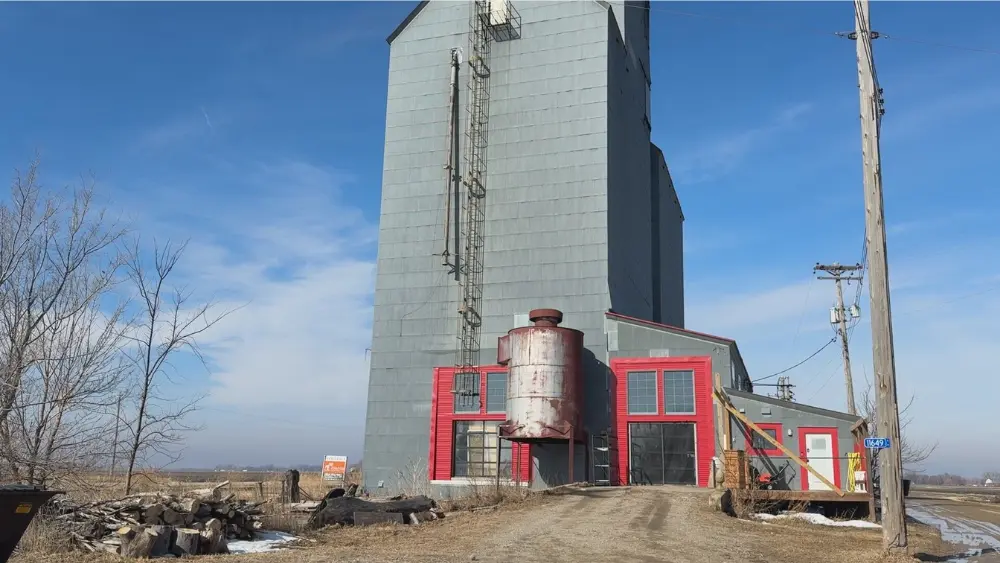
The elevator, at 11649 123rd Ave. S., about 15 miles southeast of Moorhead, has been the subject of multiple redevelopment ideas from owner and architect, Scott Dahms.
Over the years, Dahms has repurposed the elevator from a private home to an Airbnb before pursuing a state-licensed cannabis business at the site.
“The elevator helped define Baker’s identity. Structured, lawful investment is how that identity is retained, not lost,” Dahms said in front of Clay County Commissioners on March 3, 2026.
To move forward, Dahms needed Clay County to approve changes to its land-use rules. Under the proposal, the county would have reduced the required setback for cannabis-related businesses from 500 feet to 250 feet from nearby residences in agricultural zones.
The changes also would have cut the minimum commercial lot size for agricultural service centers from one acre to a half-acre.
The owner previously received preliminary approval from the state of Minnesota for a cannabis license in July but could not proceed without these county-level zoning changes.
“I have been a good neighbor, but this decision should ultimately rest on ordinance structure and planning consistencies, not personalities,” he said.
Residents who live near the elevator turned out to oppose the plan at the Clay County Commission’s March 3 meeting, warning of unintended consequences from putting a dispensary along the rural roadway.
“In addition to issues like increased noise, traffic, crime, and general disruptions to our way of life, we’ll likely see drastic increases to homeowners insurance rates as well as lower property values,” Nathan Edwards of Baker said.
Others questioned whether the site could handle parking and loading demands for a retail cannabis business.
“The building footprint, the parking, the spillover of loading, and impacts to adjacent properties is a real problem,” said Dave Steichen of Dilworth.
One resident also asked whether Dahms would bear any responsibility if an impaired-driving crash occurred involving a customer who consumed cannabis on-site. She expressed concern over possible delayed law enforcement response times to the rural, unincorporated community.
Commissioners ultimately voted unanimously to deny the requested ordinance changes. Several board members said their decision was rooted in existing zoning rules and the feedback they received from neighbors, rather than the cannabis industry itself.
“This is not about cannabis. This is about the use of property,” said Commissioner Dave Ebinger. “The rules have a purpose and the purpose is to avoid the things that are going to happen if this business is allowed to develop.”
“When we first set up this cannabis ordinance, we spent plenty of time talking about the distances from residential areas, distances from schools, daycares, all of that was addressed. For myself, I have no time, I guess, in wanting to reduce those limits,” Commissioner Paul Krabbenhoft added.
With the ordinance changes rejected, Dahms cannot open a dispensary at the elevator site under current county regulations. He has the option to appeal the commission’s decision in court.
For now, the former grain elevator remains on the market, with a “For Sale” sign posted out front.
Valley News Live visited the property Wednesday, March 4, but the owner was not on site for further comment.